There are honestly infinite ways to add variety to your workouts, today I’m going to share with you the best ways that I continue changing up all of my workouts at 40 Plus Personal Training.
ENJOY!!!
USE DIFFERENT GRIPS:
There are countless ways to change up your grips while you exercise, here are some of my favorites.
wide grip
narrow grip
underhand grip
neutral grip
single arm
rotational grips
alternating
USE DIFFERENT RANGES OF MOTIONS (ROM) AND TEMPOS
Another great way to add tons of variety is to change your range or motion (ROM) and change tempos.
A few of my favorite ways to change tempos and range of motions are
negative reps (make your motion take 4-5 seconds)
super negatives (make each rep take 20-30 seconds)
speed reps (move as fast as you can SAFELY)
pause reps (pause your motion in the middle of the rep for 2-3 seconds to add tension)
isometrics (hold a position for a designed amount of time, or push against something you can’t move for a designed amount of time)
40 Plus Personal Training Online
CHANGE ANGLES OF YOUR EXERCISE
Another great way to add variety to your workout routine is to simply change the angle of your exercise.
There are lots of ways that you can add variety by changing your angle, but some of the simple ones involve chest exercises like
Incline Bench Press
Decline Bench Press
Flat Bench Press
Standing Chest Press (using levers, or cables, or bands, etc.)
Floor Presses
CREATE INSTABILITY
Creating instability is the ultimate hack in adding fun variety to workouts, you can dramatically change any exercise with an endless array of instability tricks.
Creating instability in your workouts also strengthens your core and improves your balance.
Some of my favorite ways to add instability to any exercise are:
using chains for upper body work
hanging weights from bars with resistance bands
sandbags
water weights (even filling milk/juice/soda bottles with water)
Laying/Standing/Sitting on Terra-Cores, Bosu Balls, and/or Swiss Balls
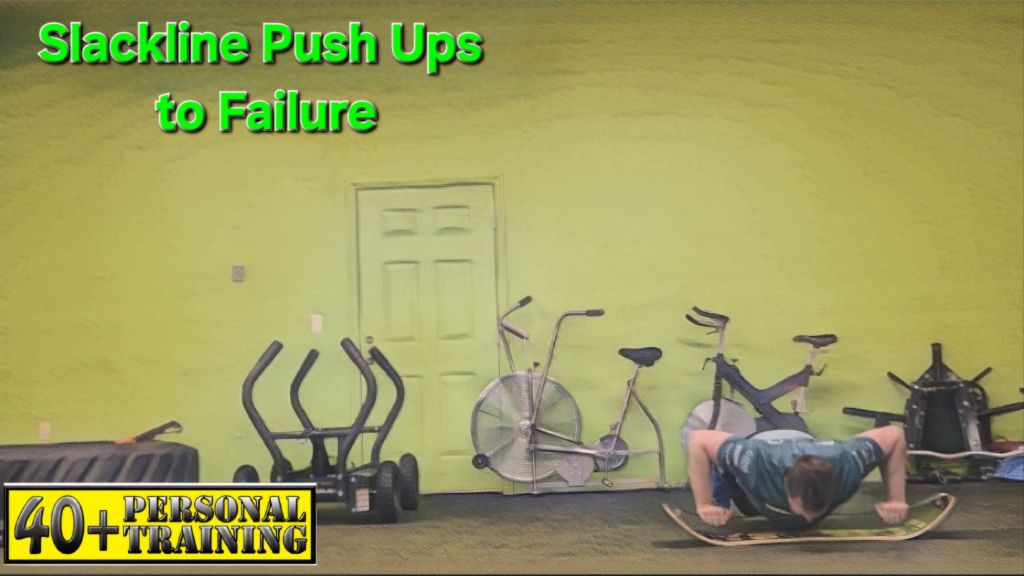
Using springboards, slacklines, or sliders
Standing on one leg, using one arm, or alternating
simply holding your legs in the air during nearly any exercise.
40 Plus Personal Training Online
CHANGE RESISTANCE TYPES
If you have access to a variety of equipment changing the type of resistance can be the easiest way to add variety. Even moving from one cable to another can sometimes change the feel of an exercise.
Different gyms will obviously have different kinds of equipment, so obviously you will need to change depending on what you have available to you.
Here are a few different examples of how to change the form of resistance on a few popular exercises:
Forms of Resistance for Glute Bridges:
dumbbells, weight plates, barbells
resistance band around the knees
sandbag or heavy bag (probably the most comfortable version)
feet on sliders, bosu ball, swiss ball, terra core, slide board, spring board, slackline, in trx etc….
Forms of Resistance for Rows
dumbbell rows
lever rows
standing cable rows
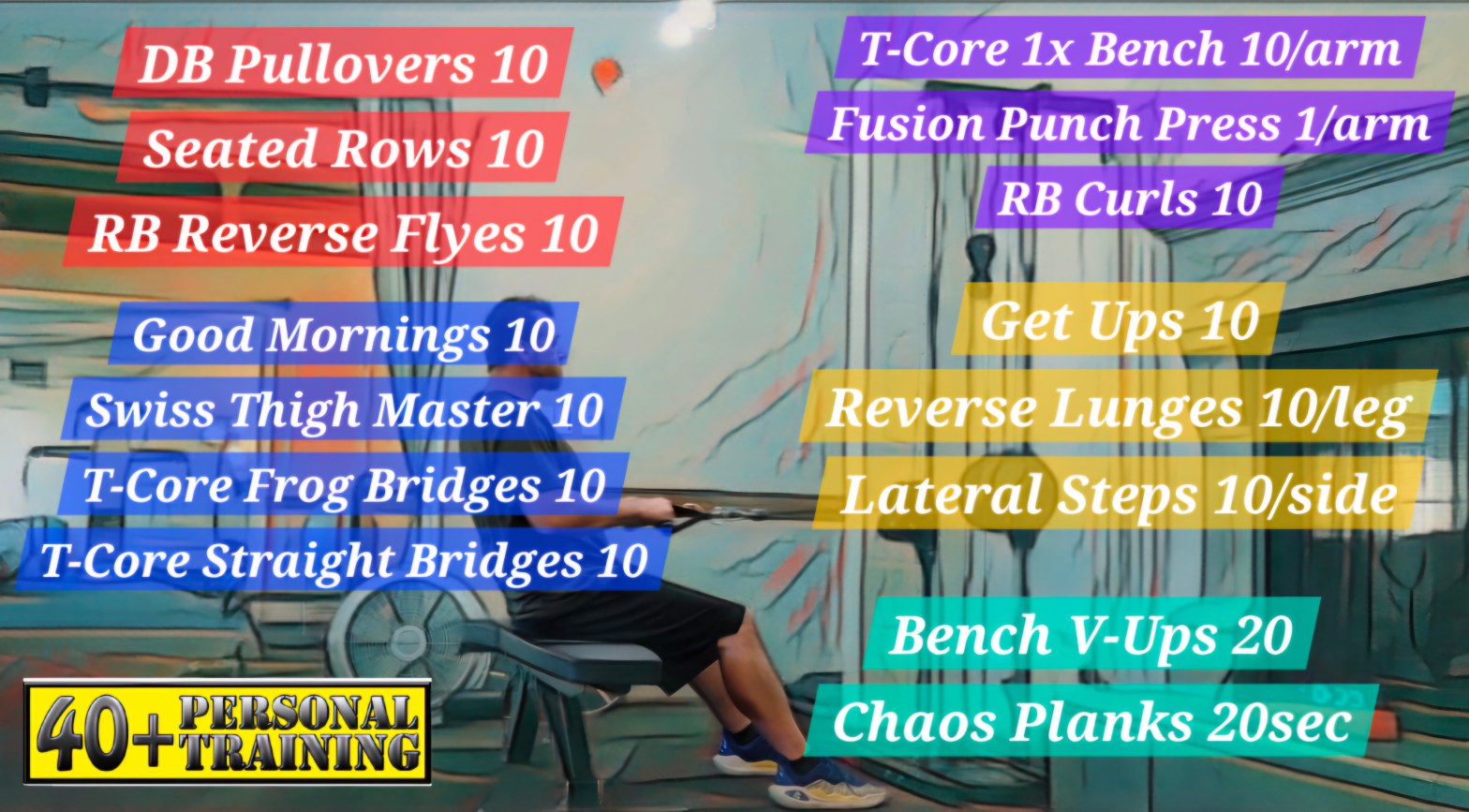
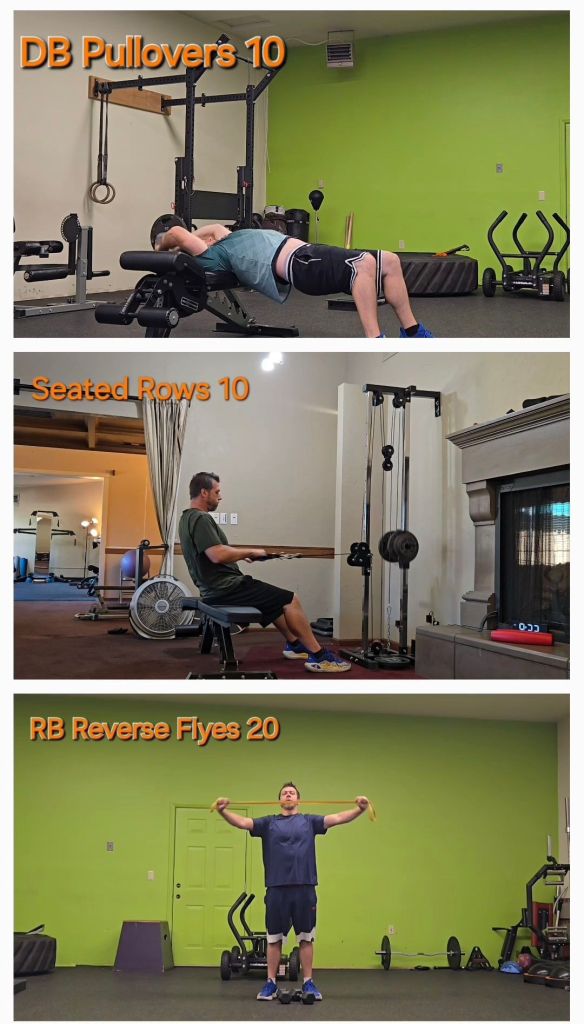
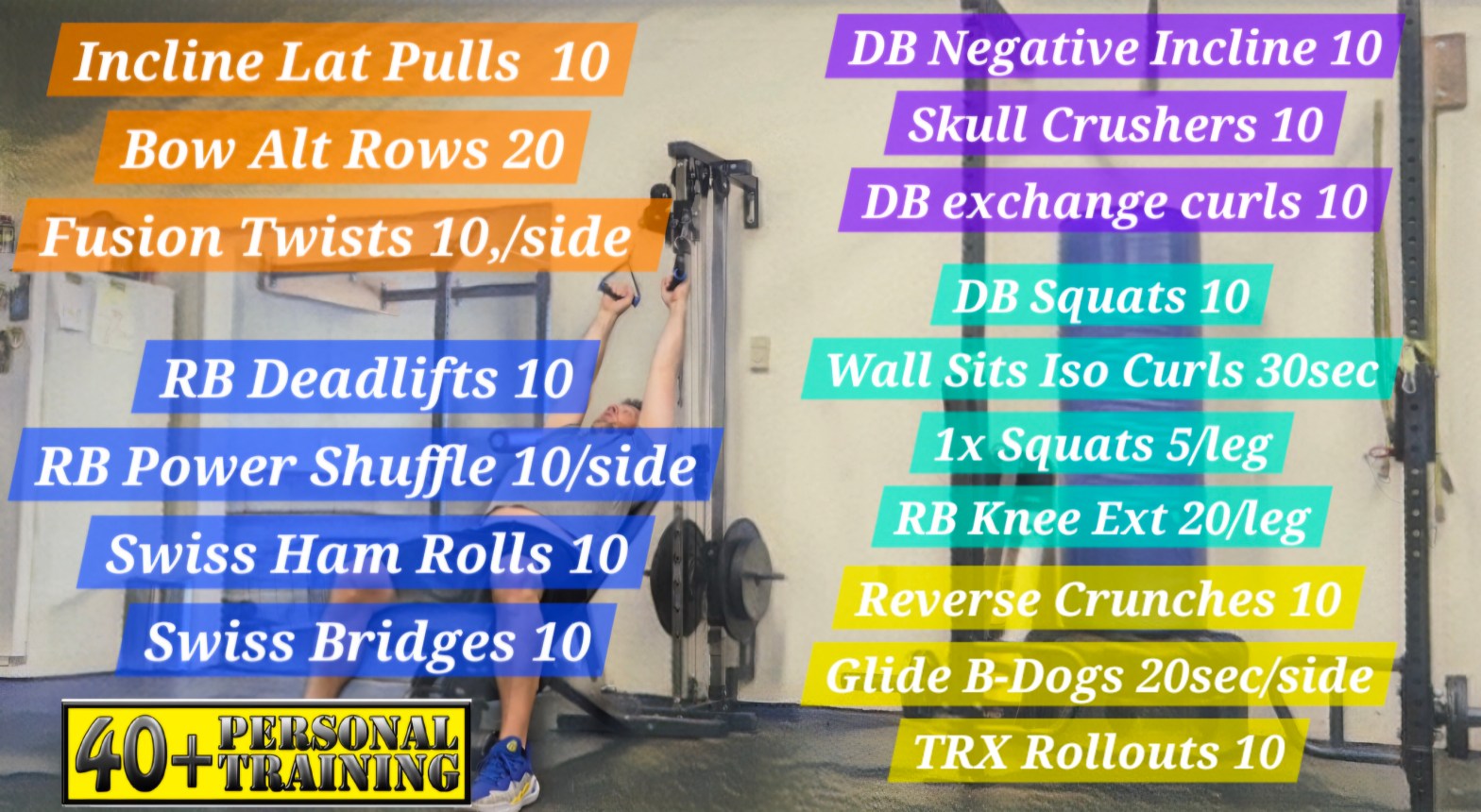
seated bowflex rows
fusion rows
kpulley rows
tank rows
inverted rows (bar)
inverted rows (trx or rings)
As you can see, if you have equipment available to you there are tons of ways to add variety to any exercise, especially if you are willing to get creative.
NOW YOU HAVE ALL THE INFORMATION YOU NEED TO CREATE INFINITE VARIETY IN YOUR WORKOUTS
There are infinite ways to create infinite variety in your workouts, there are still endless ways that we haven’t even mentioned here, but this list should really give you all the ideas you need to create infinite variety in your own workouts.
Lifting light weights can have many benefits, like preventing injuries, rehabbing injuries, and building endurance.
These are all very good benefits, but lifting light weights doesn’t need to be boring and monotonous.
One of the best benefits of lifting light weights is the potential variety and fun 😁
Since 2012, I have worked exclusively with people over 40.
One of my main goals over the last 12+ years has been to find as many ways as possible to make light weight challenging.
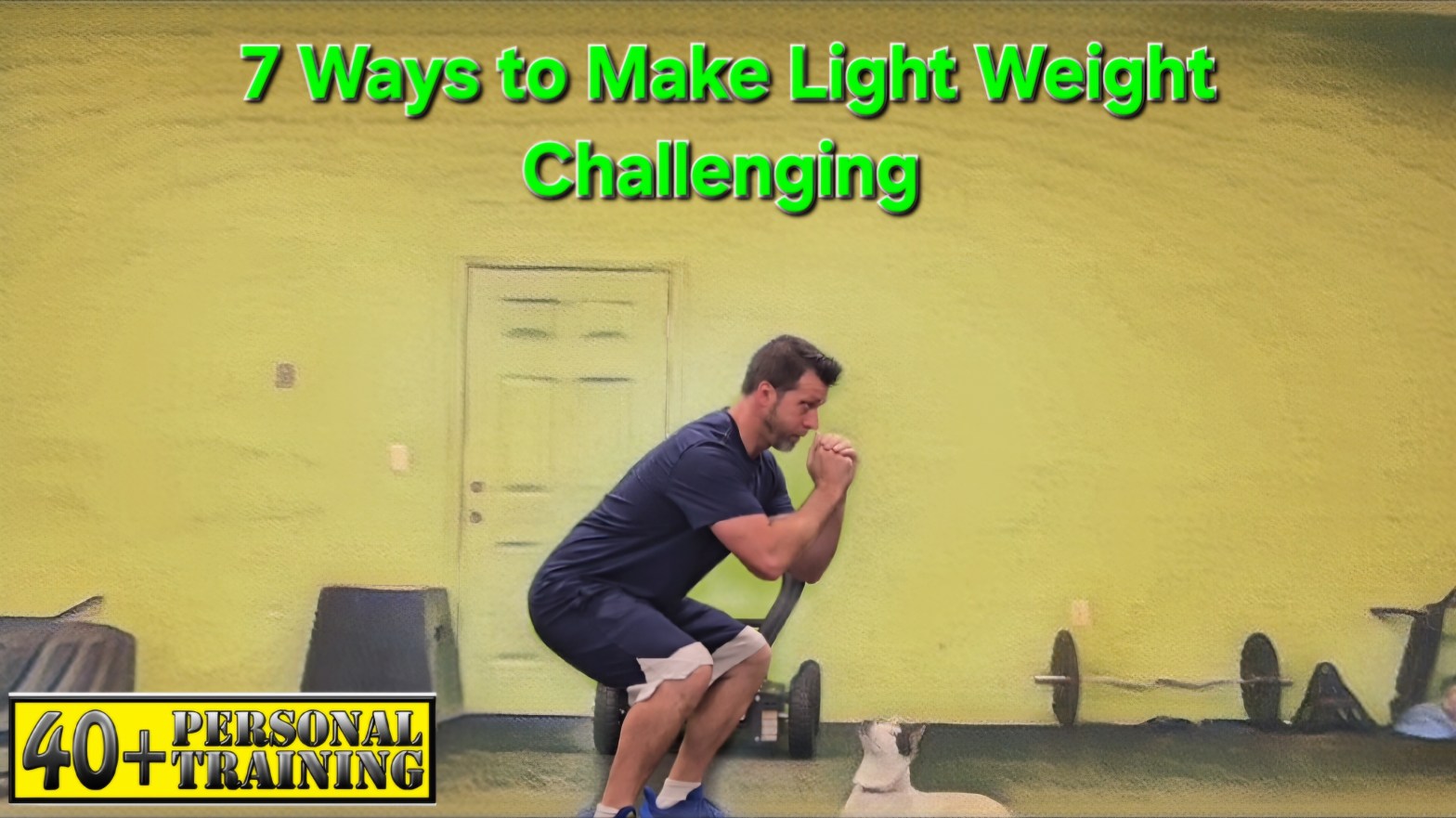
Below are 7 of my favorite ways to make light weight challenging. Enjoy!
1 High Reps
The first way to make light weight challenging is to use high reps.
This one is very obvious, but still very true.
You can make any weight challenging if you do enough reps.
There are many high rep schemes out there, and most will involve doing 20 reps. Which will make most exercises challenging.
When doing high reps, I prefer to either go to failure (as many reps as you can) or 100 straight reps with as little rest as possible.
The feeling you get from 100 straight reps can not be duplicated any other way.
2 Slow Reps (Negatives)
The second way to make light weight challenging is by using negatives (slow reps).
Negative reps traditionally tend to be used for super heavy weights, but they can be just as effective using light weights.
To do negatives, slowly lower whatever weight you are using, make it take 4-5 seconds on the way down, then go back up at a normal speed.
3 Super Slow Reps (Super Negatives)
You can also make light weight challenging by using super slow reps.
These are performed a lot like negatives, but you go so slow that you are barely moving.
Ideally, you will want each direction to take 15-20 seconds.
4 Pause Reps (Stop n Go)
Another great way to make light weight challenging is to add pause reps.
Pause reps are a great way to add time under tension and can make even the lightest weight seem challenging.
I prefer to pause at the bottom of each rep for about 3 seconds, but the longer you pause, the harder the exercise will get.
5 Hanging Weights
Hanging Weights
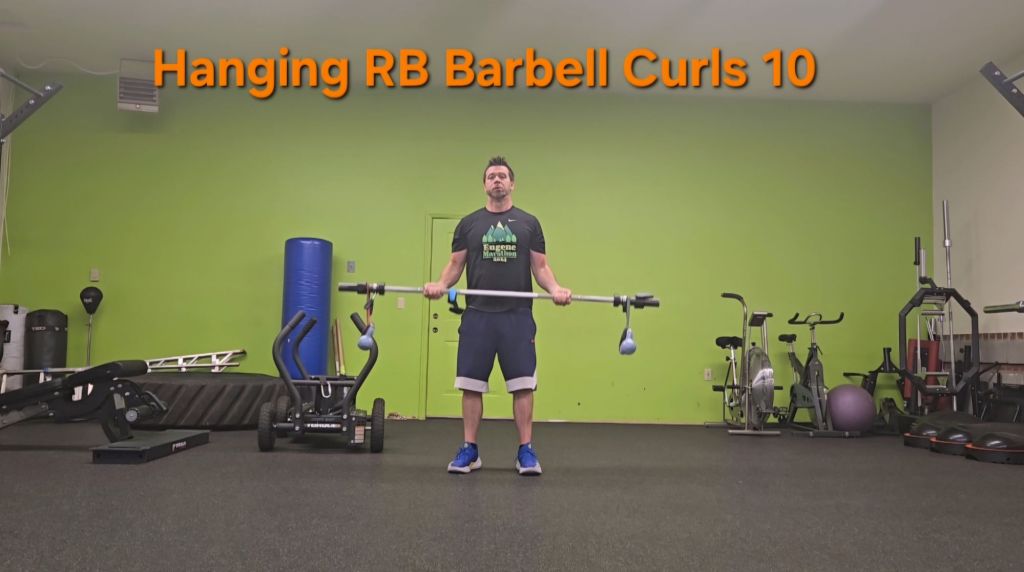
Hanging weights are one of my absolute favorite ways to make light weight challenging.
Loop some small resistance bands around a kettlebell or weight plate, and then hang them from your bar.
This may look silly, but the pump you get from this is outstanding!
6 Mini Reps
Another great way to may light weight challenging is to add in mini reps.
It sounds counterintuitive, but using a smaller range of motion can actually be much more challenging.
I prefer to use mini reps during the bottom ranges of the exercise.
But honestly, they can be used anywhere in the exercise.
7 Isometrics
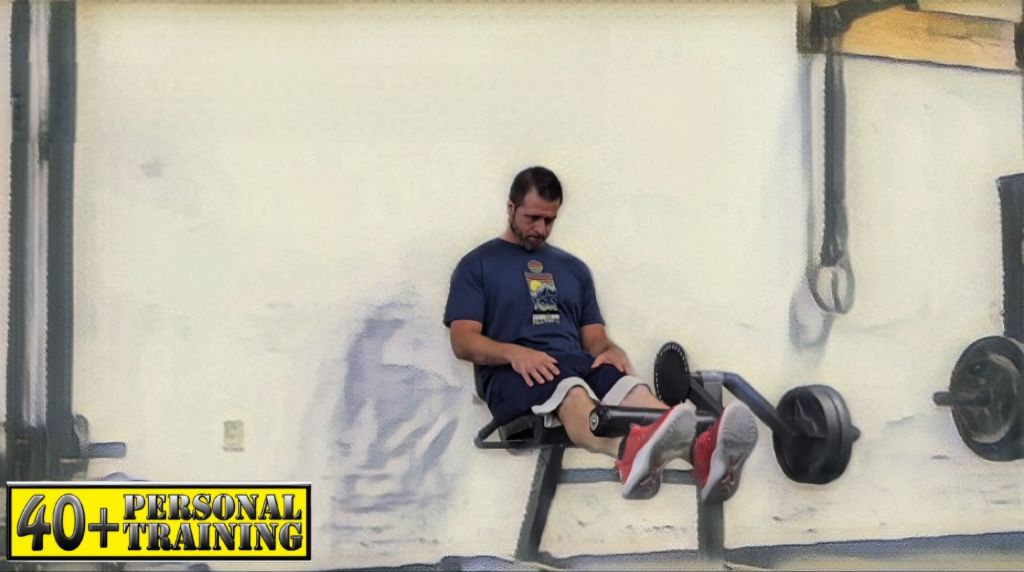
Isometrics are another great way to make light weight (or even body weight challenging).
In simple terms isometric exercises are “not moving”, if you are using weights for your isometric exercises, simply hold the weight in place (make sure that it’s in a challenging position). If you are doing body weight isometrics (like lunges, squats, wall sits, planks, bird dogs) just hold the position.
When doing isometrics, I prefer to do 30-second holds, but the longer you hold them, the harder they will be.
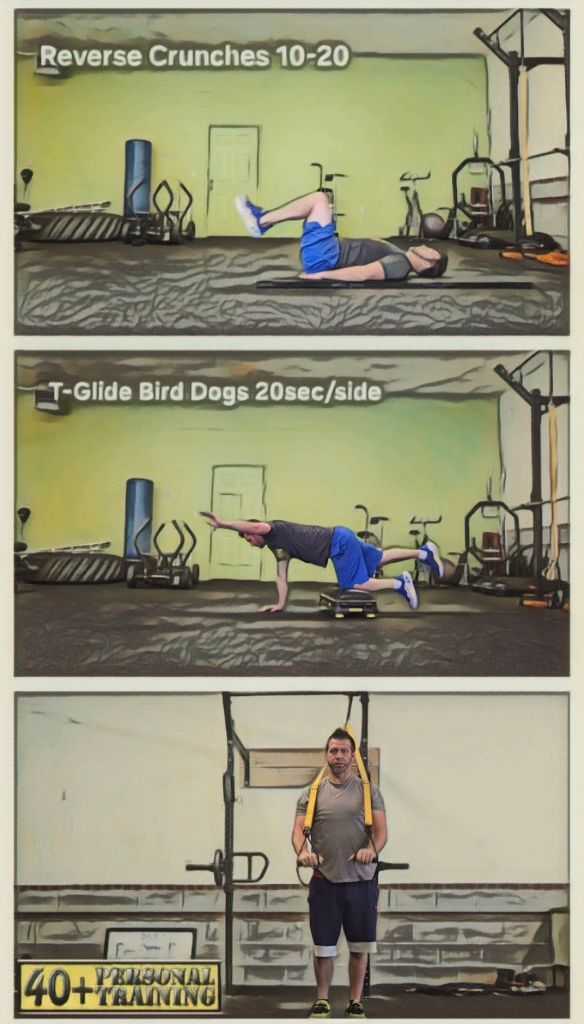
Isometric Leg Extensions
Bonus Tip
When doing a lightweight workout, rest as little as possible.
Going directly from one exercise to the next exercise, fatigues the muscles more, allows you to “feel” the muscles more, and adds an aspect of cardio to your workout.
Conclusion
Make light weights challenging by adding high reps, negatives, super negatives, pause reps, hanging weights, mini reps, or isometrics into your next workout.













 40 Plus Personal Training